Why Stores Are Closed on Sundays in Germany
(Explained for Americans)
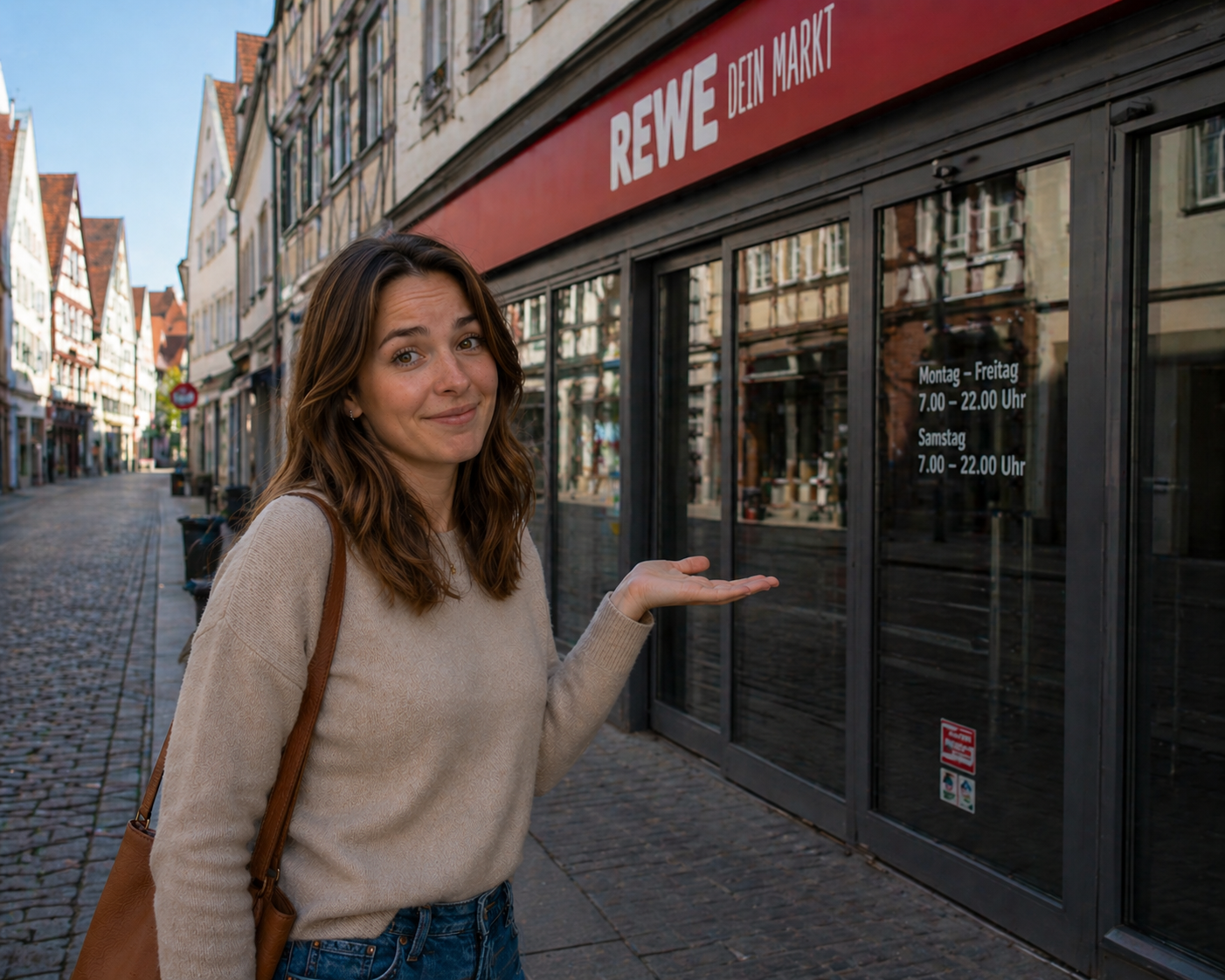
When Sarah arrived on a Sunday, she was surprised to find quiet streets and closed shops throughout the city.
One of the biggest surprises for many Americans in Germany is Sunday. In many German towns and cities, shops are closed, streets are quieter, and everyday life feels much slower than during the week.
For Americans who are used to shopping, errands, and restaurants being open seven days a week, this can feel unusual at first. But in Germany, Sunday has a different cultural and legal meaning.
Quick Facts About Sundays in Germany
- Most supermarkets and retail stores are closed on Sundays.
- Gas stations, train stations, airports, and some bakeries may still be open.
- Sunday is protected by law as a day of rest.
- Many Germans use Sunday for family, walks, hobbies, and relaxation.
- The rules vary slightly by federal state and city.
Why Are Stores Closed?
The main reason is that Sunday is legally protected as a day of rest. Germany has long-standing rules that limit regular retail opening hours on Sundays and public holidays.
This is not only about religion. Today, many Germans also see Sunday as a social and cultural protection: one day of the week should not be dominated by work, shopping, and consumption.
Why This Feels Strange to Americans
In the United States, convenience is often very important. Many stores are open late, and Sunday shopping is completely normal in most places.
In Germany, the idea is different. People are expected to plan ahead. If you need groceries, you usually buy them on Saturday. If you forget something, you may have to wait until Monday or find an open shop at a train station or gas station.
Germany vs USA: Sunday Shopping
| Germany | USA |
|---|---|
| Most stores closed on Sundays | Most stores open on Sundays |
| Sunday is a protected rest day | Sunday is often a normal shopping day |
| Planning ahead is expected | Convenience is expected |
| Quiet streets and slower pace | Shopping, errands, and activities continue |
What Is Still Open on Sundays?
Although most regular stores are closed, Germany does not completely shut down. Some places may still be open:
- bakeries, often only in the morning
- gas stations
- shops in major train stations
- shops at airports
- some restaurants, cafés, and museums
- emergency pharmacies
This means that you can usually find basic supplies, but Sunday is not designed for full grocery shopping or regular errands.
What Americans Often Misunderstand
Sarah’s first reaction was typical: she wondered why a modern country would make shopping so difficult on one of the few free days of the week. But after spending time with a German family in their garden, she noticed that the rule also creates shared free time. If most people are not working or shopping, it becomes easier to meet, cook, talk, and relax together.
Many Americans first see Sunday closing rules as inconvenient. That reaction is understandable. But for many Germans, the quiet Sunday is not a problem. It is part of the rhythm of the week.
The rule creates a shared pause. Most people are off work at the same time, which makes it easier to spend time with family or friends.
How to Adapt as a Visitor

Sarah discovers that Sunday in Germany is often about rest, family, and shared time rather than shopping.
For Sarah, the practical lesson was simple: buy groceries before Sunday, but do not treat Sunday as a lost day. It can be a good day for a walk, a museum visit, a café, a train trip, or a quiet afternoon with people you know.
If you are visiting Germany, the most important rule is simple: do your grocery shopping before Sunday.
- Buy food on Friday or Saturday.
- Check opening hours before holidays.
- Use train station shops only as a backup.
- Expect quieter streets and fewer options.
Frequently Asked Questions
Are all stores closed on Sundays in Germany?
No. Most regular retail stores are closed, but some bakeries, gas stations, train station shops, airport shops, restaurants, and emergency pharmacies may be open.
Why does Germany keep this rule?
The rule protects Sunday as a day of rest. It also reflects a cultural idea that not every day should be focused on work and shopping.
Can tourists still buy food on Sunday?
Yes, but options are limited. Train stations, gas stations, and some bakeries may sell food, but regular supermarkets are usually closed.
Do Germans like Sunday closing rules?
Many Germans accept them as normal. Some find them inconvenient, but others appreciate the quiet and the shared day off.
Conclusion
Sunday closing rules are one of the clearest everyday differences between Germany and the United States. For Americans, they may seem inconvenient at first. For many Germans, they are part of a broader idea of structure, rest, and work-life balance.
Once you understand this, Sunday in Germany feels less strange. It is not just a day when stores are closed. It is a day when daily life deliberately slows down.
Sources
- Bundesministerium der Justiz. (n.d.). Grundgesetz für die Bundesrepublik Deutschland: Artikel 140 (Sonntagsruhe). Retrieved from https://www.gesetze-im-internet.de
- Ladenschlussgesetz (LadSchlG). (n.d.). Gesetz über den Ladenschluss. Retrieved from https://www.gesetze-im-internet.de/ladschlg/
- HDE – Handelsverband Deutschland. (n.d.). Store opening hours in Germany. Retrieved from https://einzelhandel.de
- Statista. (n.d.). Retail opening hours and consumer behavior in Germany. Retrieved from https://www.statista.com
- Deutscher Gewerkschaftsbund (DGB). (n.d.). Sunday rest and worker protection in Germany. Retrieved from https://www.dgb.de
- Goethe-Institut. (n.d.). Everyday culture in Germany: Leisure and Sundays. Retrieved from https://www.goethe.de
Read also: