Why Germans Separate Trash So Strictly
(Explained for Americans)
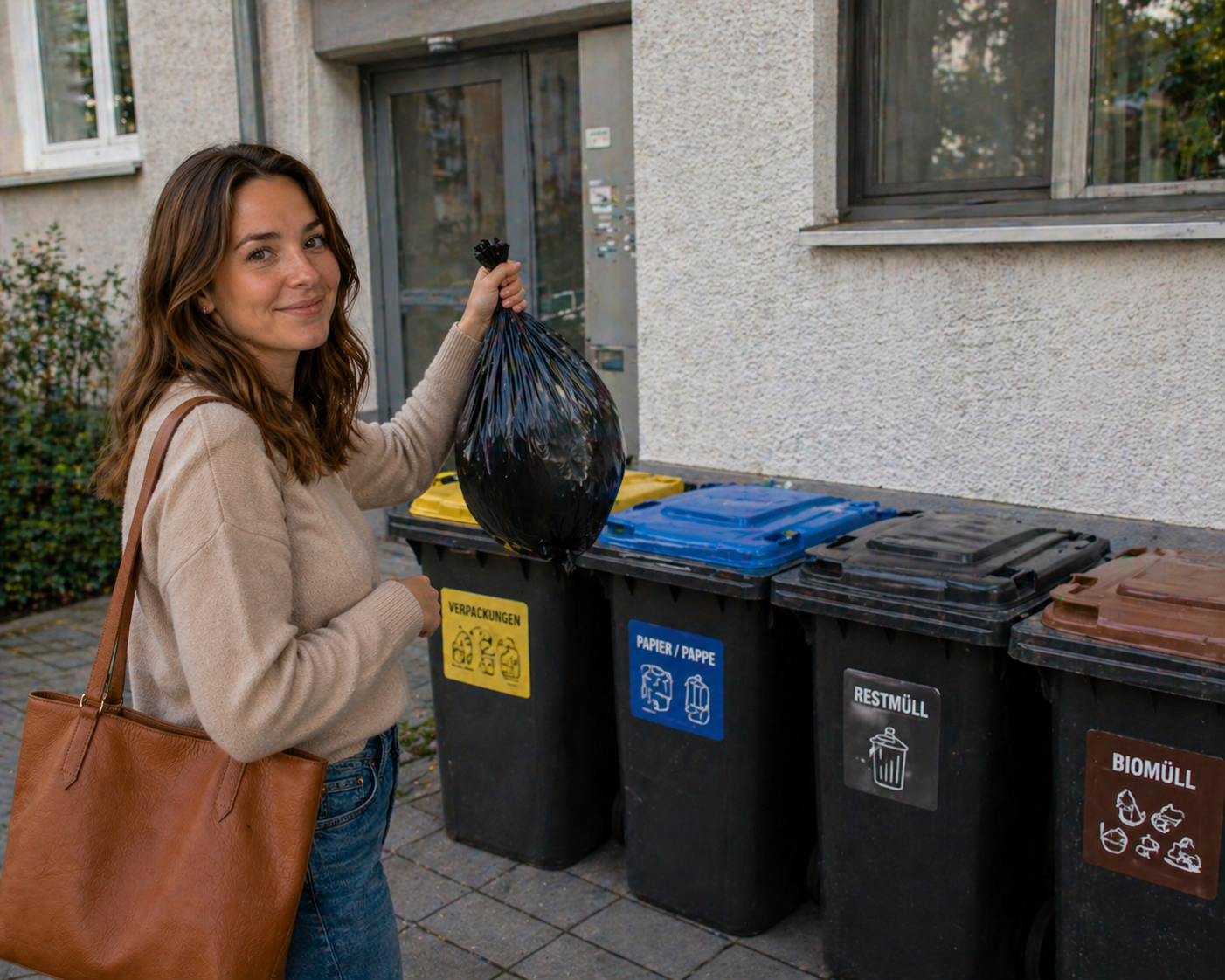
When Sarah Mitchell first moved into her apartment in Germany, she noticed something unusual right away: there was not just one trash bin, but several. Paper, packaging, general waste, and more.
Standing in front of the bins with a full trash bag, she hesitated. What seemed simple in the United States suddenly required decisions. Where should everything go?
One thing many Americans notice in Germany is how seriously people separate trash. In many German homes, there is not just one trash can. There may be separate bins for paper, plastic packaging, organic waste, glass, and general trash.
At first, this can feel confusing. But for many Germans, trash separation is a normal part of everyday life. It is not only about recycling. It is also about rules, responsibility, and keeping the waste system organized.
Quick Facts About Trash Separation in Germany
- German households usually separate different types of waste.
- Paper, glass, packaging, organic waste, and general trash often go into different bins.
- The exact bin colors and rules can vary by city or region.
- Wrongly sorted trash can cause problems for recycling and waste collection.
- Many Germans learn these rules from childhood.
Why Germans Separate Trash
The main reason is that different materials can be reused, recycled, composted, or disposed of in different ways. If everything is thrown into one bin, useful materials are lost and recycling becomes harder.
Germany has built a system where households are expected to do part of the sorting before trash is collected. This makes recycling and waste treatment more efficient.
The Most Common German Trash Bins
The exact system depends on the city, but many places use these basic categories:
| Type of waste | Typical examples |
|---|---|
| Paper | newspapers, cardboard, paper packaging |
| Packaging | plastic packaging, metal cans, drink cartons |
| Organic waste | food scraps, vegetable peels, coffee grounds |
| Glass | empty glass bottles and jars, often separated by color |
| General waste | things that do not belong in the other categories |
Why This Feels Strange to Americans
In the United States, recycling rules vary widely depending on the city or state. In some places, recycling is simple and mixed. In others, it is limited or not strongly enforced.
In Germany, the system is much more visible in daily life. People are expected to know where things belong. This can feel strict, especially when there are several bins and each one has its own rules.
Sarah experienced this confusion on her first day. She stood outside her building with a trash bag, trying to figure out which bin was correct. It was not difficult, but it required attention in a way she was not used to.
Germany vs USA: Trash and Recycling
| Germany | USA |
|---|---|
| Several household waste categories are common | Systems vary strongly by city and state |
| Sorting is expected at home | Mixed recycling is more common in some areas |
| Glass is often collected separately | Glass rules vary widely |
| Organic waste bins are common in many areas | Food waste collection is less common in many places |
What Goes in the Yellow Bin or Yellow Bag?
In many parts of Germany, packaging waste goes into a yellow bin or yellow bag. This often includes plastic packaging, metal packaging, and drink cartons.
A common mistake is to think that all plastic belongs there. Usually, it is mainly packaging. A broken plastic toy, for example, may not belong in the yellow bin.
What About Glass?
Glass is often taken to public glass containers. In many places, glass is separated by color: white, brown, and green. This helps recycling because different glass colors are processed separately.
However, not every glass item belongs there. Drinking glasses, mirrors, ceramics, or light bulbs may require different disposal.
Why Germans May Correct You
Some Americans are surprised when Germans comment on wrongly sorted trash. This can feel personal, but it usually has a practical reason. If one person puts the wrong things into a bin, it can create problems for the whole building or household.
In apartment buildings, shared bins are used by many people. If the waste is badly sorted, neighbors may become annoyed because everyone is affected.
This also happened to Sarah. One of her neighbors politely pointed out that she had put the wrong type of packaging into the general waste bin. It was not meant as criticism, but as a practical correction so the system would work properly.
What Americans Often Misunderstand
Trash separation in Germany is not only an environmental habit. It is also part of a broader culture of order and shared responsibility. People are expected to follow the system because the system only works if many people participate.
That does not mean every German enjoys sorting trash. Many people find it annoying too. But most accept it as a normal part of daily life.
How to Adapt as a Visitor or New Resident
- Check the local rules in your city or apartment building.
- Do not assume bin colors are the same everywhere.
- Keep paper, glass, packaging, and general waste separate.
- Ask neighbors or landlords if you are unsure.
- Look for labels or printed instructions on the bins.
Frequently Asked Questions
Is trash separation mandatory in Germany?
In practice, yes. Waste systems are organized around separation, and households are expected to sort their trash correctly.
Are trash bin colors the same everywhere in Germany?
No. Many colors are common, but local rules can vary. Always check the rules in your city or building.
Why are Germans so strict about recycling?
Because the system depends on correct sorting. Wrongly sorted waste can make recycling harder and cause problems for shared bins.
Can I put all plastic in the yellow bin?
Usually no. The yellow bin or yellow bag is mainly for packaging waste, not every plastic object.
Where do bottles go?
Many drink bottles have a deposit and should be returned to a store. Other glass bottles and jars usually go to glass containers.
Conclusion
German trash separation can seem complicated at first, especially for Americans who are used to simpler systems. But the basic idea is easy: different materials should not all end up in the same place.
Once you understand the main categories, the system becomes much easier. It is another example of how Germany organizes everyday life through rules, structure, and shared responsibility.
Sources
- Umweltbundesamt. (n.d.). Waste separation and recycling in Germany. Retrieved from https://www.umweltbundesamt.de
- Bundesministerium für Umwelt, Naturschutz, nukleare Sicherheit und Verbraucherschutz. (n.d.). Waste management and circular economy in Germany. Retrieved from https://www.bmuv.de
- Gesetz zur Förderung der Kreislaufwirtschaft und Sicherung der umweltverträglichen Bewirtschaftung von Abfällen (KrWG). (n.d.). Circular Economy Act. Retrieved from https://www.gesetze-im-internet.de/krwg/
- European Commission. (n.d.). Waste management in the European Union. Retrieved from https://ec.europa.eu
- Der Grüne Punkt – Duales System Deutschland GmbH. (n.d.). Packaging recycling and the dual system in Germany. Retrieved from https://www.gruener-punkt.de
- Statista. (n.d.). Recycling rates and waste separation in Germany. Retrieved from https://www.statista.com
Read also: