Why Germans Return Bottles for Money
(Pfand System Explained)
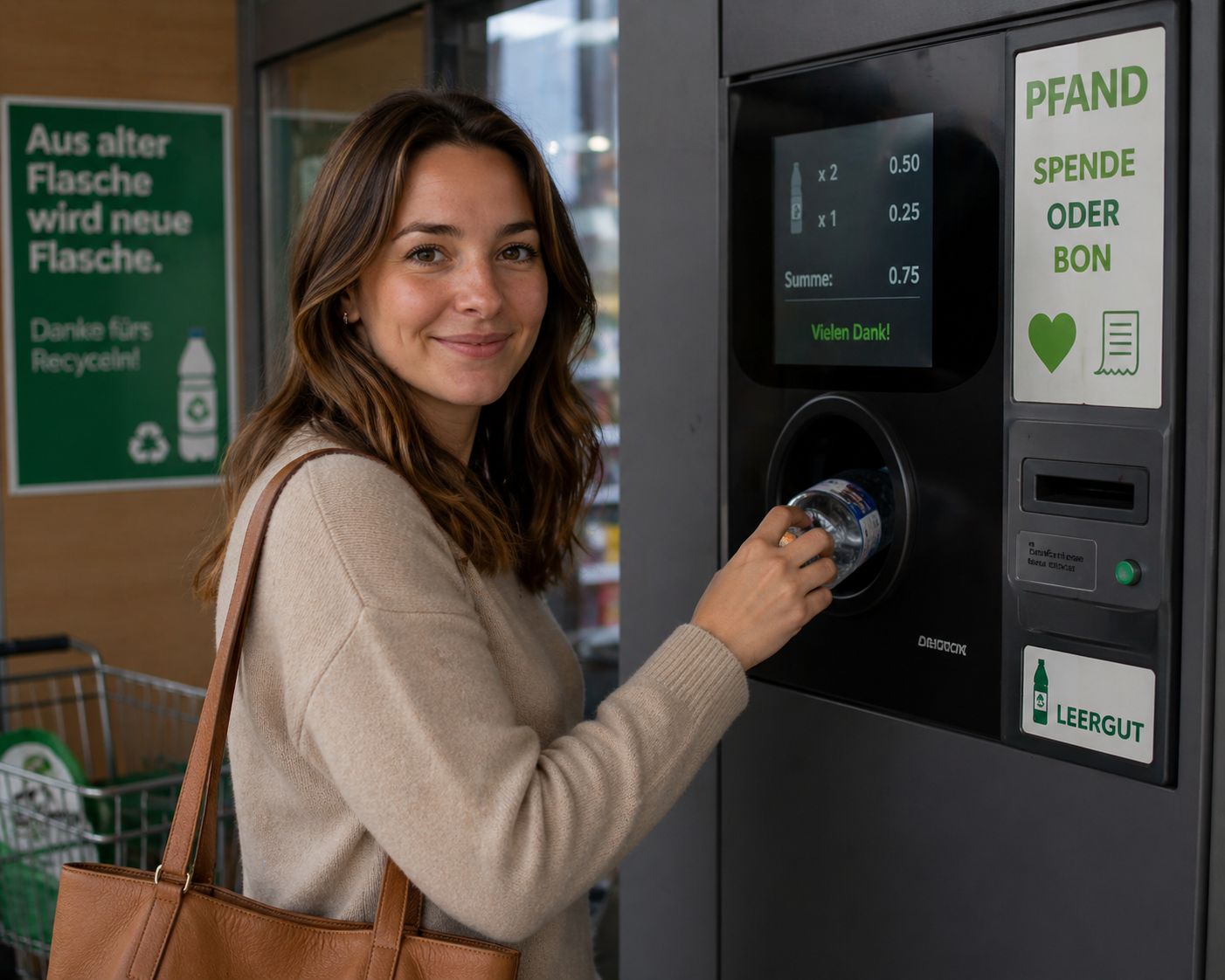
When Sarah Mitchell, an American project manager visiting Germany, went to a supermarket for the first time, she noticed something unusual: people were walking in with bags full of empty bottles.
At first, she assumed they were just getting rid of trash. But then she saw a machine near the entrance and realized that these bottles still had value.
One of the first things many Americans notice in Germany is that people do not simply throw empty bottles and cans into the trash. Instead, they return them to supermarkets and receive money back. This system is called Pfand.
For visitors from the United States, this can seem unusual at first. In Germany, an empty bottle is often not just trash. It still has a small financial value. That is why many Germans keep empty bottles at home, collect them in bags, and take them back to the store later.
What Does “Pfand” Mean?
The German word Pfand means deposit. When you buy many drinks in Germany, you pay a small extra amount. You get this money back when you return the empty container.
This means that the deposit is not really part of the drink price. It is more like a temporary payment. You pay it when you buy the drink, and you get it back when you return the bottle or can.
How the System Works
- You buy a drink.
- You pay the price plus a deposit.
- You return the empty bottle or can to a supermarket.
- A machine scans it.
- You receive a receipt.
- You use the receipt at checkout.
In most supermarkets, the bottle return machine is near the entrance or close to the checkout area. In German, this machine is often called a Pfandautomat. You put the empty bottles or cans into the opening one after another. The machine checks the barcode or the shape of the container and adds the deposit amount to your receipt.
When you are finished, you press a button on the machine. The machine prints a small paper receipt. You take this receipt to the checkout. The amount is then deducted from your shopping bill, or in some stores you can receive the money in cash.
How Much Money Do You Get Back?
The amount depends on the type of bottle or can. Many single-use plastic bottles and cans have a deposit of 25 cents. Reusable bottles usually have a lower deposit, often around 8 cents or 15 cents, depending on the bottle type.
For example, if you buy four plastic water bottles with a 25-cent deposit each, you pay one euro extra in deposits. When you return the four empty bottles, you get that one euro back.
The amount may seem small for one bottle, but it adds up quickly. A bag full of empty bottles can easily be worth several euros.
Why Germany Uses This System
The system reduces waste and increases recycling. Because bottles have value, people are less likely to throw them away.
For Sarah, this was one of the first moments where she realized how strongly everyday behavior in Germany is shaped by small rules and incentives.
Sarah noticed that returning bottles was something everyone did, not just environmentally conscious people.The financial incentive is important. Even people who are not especially interested in environmental issues usually return bottles because they want their money back. This makes the system very effective in everyday life.
It also keeps streets, parks, train stations, and public places cleaner. When bottles are worth money, fewer people leave them on the ground.
Why It Feels Unusual in the USA
In the United States, recycling rules vary by state. In Germany, the deposit system is part of everyday life.
Some American states have bottle deposit systems, but many do not. Even where they exist, they are often not as visible in daily life as in Germany. In Germany, returning bottles is normal for almost everyone. Students, families, office workers, elderly people, and tourists all use the same machines.
The main difference is that Germany has made the system very practical. You do not need to go to a special recycling center. You can return many bottles and cans during a normal supermarket visit.
What It Looks Like in Real Life
A typical situation looks like this: a person goes shopping and takes a bag of empty bottles from home. Before buying groceries, they first go to the return machine. They put the bottles into the machine, one after another. The machine makes some noise, counts the deposit, and prints a receipt.
Then the person does their normal shopping. At checkout, they hand the receipt to the cashier or scan it at the self-checkout. The deposit amount is subtracted from the total price.
This is why you may see people entering supermarkets with bags full of empty bottles. They are not doing anything strange. They are simply getting their deposit money back.
After a few days, Sarah started doing the same. She kept a separate bag in her apartment and brought it with her whenever she went shopping.
Reusable vs Single-Use Bottles
Some bottles are reused multiple times. Others are recycled after one use. Both types are part of the Pfand system.
Reusable bottles are called Mehrweg in German. These bottles are cleaned and filled again. They are often made of glass or thicker plastic. Many beer bottles and some water bottles are reusable.
Single-use bottles are called Einweg. These bottles or cans are not refilled. They are collected, processed, and recycled. Many thin plastic bottles and beverage cans are single-use containers.
For visitors, the difference is not always easy to see immediately. The easiest rule is simple: if the container has a deposit symbol or if the store accepts it in the machine, you can return it and get money back.
How to Recognize Pfand Bottles
Many bottles and cans with a deposit have a special deposit symbol on the label. On single-use containers, you will often see the German deposit logo. The barcode is also important because the machine uses it to identify the container.
Not every bottle in Germany has Pfand. Some juice bottles, wine bottles, milk containers, or imported products may be treated differently. If you are not sure, look at the label. Sometimes you will see words such as Pfand, Mehrweg, or Einweg.
If a bottle does not have a deposit, it usually belongs in the correct recycling bin or glass container, depending on the material.
Common Mistakes Visitors Make
A common mistake is throwing away bottles that still have a deposit. This is not a disaster, but it means you lose the deposit money you already paid.
Another common mistake is trying to return every bottle at every store. Some machines only accept the types of bottles that the store sells. For example, a discount supermarket may not accept every reusable glass bottle from a different brand or store chain.
Visitors also sometimes crush plastic bottles before returning them. This can be a problem. If the barcode or shape is damaged, the machine may reject the bottle. It is better to keep deposit bottles in a returnable condition.
If the machine rejects a bottle, it does not always mean the bottle has no deposit. Sometimes the barcode is damaged, the bottle is dirty, or the store simply does not accept that type of container.
Why People Leave Bottles Next to Trash Cans
In German cities, you may see empty bottles placed next to trash cans instead of inside them. This is usually done on purpose.
The idea is simple: if someone does not want to return the bottle, another person can take it and collect the deposit. This is especially common in parks, near train stations, or in busy public places.
Some people collect bottles as a way to earn a small amount of money. Leaving bottles next to a trash can makes it easier for them and avoids forcing them to search inside the trash.
Is It Worth Returning Bottles?
Yes, usually it is worth returning them. For one single bottle, the amount may not feel important. But for several bottles, it becomes noticeable.
For example, ten single-use bottles with a 25-cent deposit are worth 2.50 euros. That can pay for part of your next grocery purchase.
For Germans, returning bottles is not only about money. It is also a habit. Many people would find it wasteful to throw away something that still has value.
Tip for Visitors
Look for the deposit symbol on bottles. Most supermarkets have return machines near the entrance.
If you stay in Germany for more than a few days, keep an extra bag for empty deposit bottles. Before going grocery shopping, take the bag with you and return the bottles first.
Do not crush bottles or remove labels before returning them. The machine usually needs the barcode and the original shape to recognize the container.
Frequently Asked Questions
Can tourists use the Pfand system?
Yes. Tourists can use the Pfand system like everyone else. You do not need an account, an ID, or a German address. You simply return the bottle or can and receive a receipt.
Can you return bottles anywhere?
Not always. Many supermarkets accept a wide range of deposit bottles and cans, but not every store accepts every type. Large supermarkets usually accept more types than very small shops.
What happens if I do not return the bottle?
Nothing special happens. You simply lose the deposit money you already paid. The bottle should still be disposed of correctly.
Do glass bottles have Pfand?
Many glass bottles have Pfand, especially beer bottles and some water or soft drink bottles. However, not every glass bottle has a deposit. Wine bottles, for example, are often handled differently.
Can I get cash for the Pfand receipt?
In many stores, the receipt is used at checkout and deducted from your purchase. Some stores may also pay out the amount in cash. This depends on the store.
Why does the machine reject some bottles?
Sarah made another typical mistake: she once squeezed a plastic bottle before returning it, and the machine rejected it.
The machine may reject a bottle if the barcode is damaged, if the bottle is crushed, if the label is missing, or if the store does not accept that type of container.
Is Pfand the same as recycling?
Not exactly. Pfand is a deposit system. Recycling is what happens to many materials after collection. Some Pfand bottles are recycled, while reusable bottles are cleaned and filled again.
Why do some people collect empty bottles in public places?
Because the bottles are worth money. A few bottles are only worth a small amount, but collecting many bottles can add up.
Conclusion
The Pfand system is a simple idea: give bottles value so they are returned instead of thrown away. It shows how small financial incentives can change everyday behavior.
For Americans, the system may seem complicated at first, but it quickly becomes normal. Once you understand that many empty bottles are still worth money, German supermarket behavior makes much more sense.
Sources
- Bundesministerium für Umwelt, Naturschutz, nukleare Sicherheit und Verbraucherschutz. (n.d.). Packaging Act (Verpackungsgesetz) and deposit system in Germany. Retrieved from https://www.bmuv.de
- Gesetz über das Inverkehrbringen, die Rücknahme und die hochwertige Verwertung von Verpackungen (VerpackG). (n.d.). German Packaging Act. Retrieved from https://www.gesetze-im-internet.de/verpackg/
- Umweltbundesamt. (n.d.). Deposit system for beverage packaging in Germany. Retrieved from https://www.umweltbundesamt.de
- Deutsche Pfandsystem GmbH (DPG). (n.d.). How the German deposit system works. Retrieved from https://www.dpg-pfandsystem.de
- European Commission. (n.d.). Waste management and recycling systems in the EU. Retrieved from https://ec.europa.eu
Read also: