Why Germans Walk So Much
(Explained for Americans)
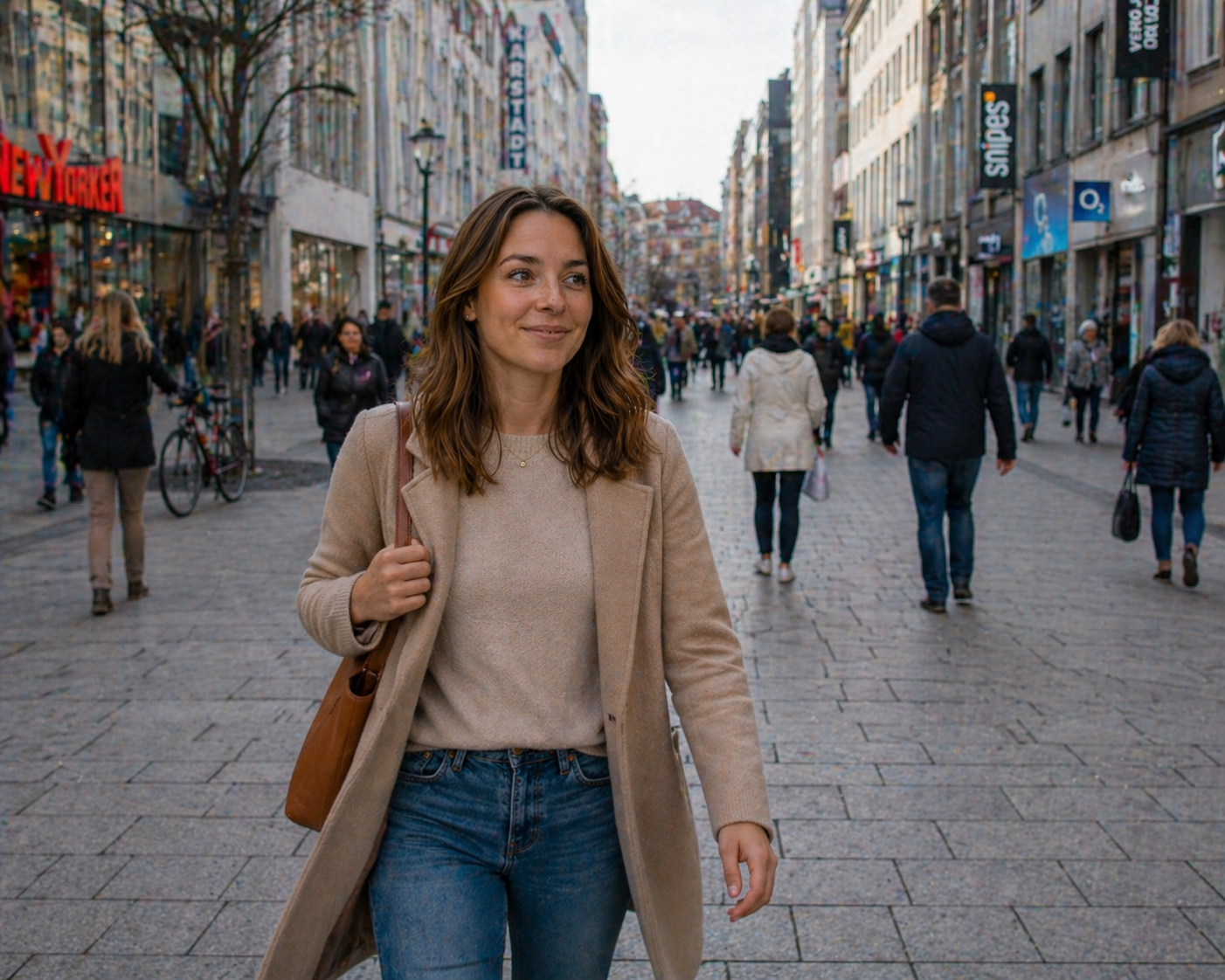
Sarah discovers that walking short distances is a normal and expected part of everyday life in Germany.
Many Americans visiting Germany notice something simple but surprising: people walk a lot. Streets, sidewalks, parks, and city centers are full of people walking, even for short distances.
In the United States, driving is often the default choice. In Germany, walking is a normal part of everyday life. This difference is not accidental. It is the result of how cities are built, how transportation works, and how people organize their daily routines.
Sarah Mitchell noticed this change immediately after arriving in Germany. On her first day, she planned to take a short trip to a nearby store. Instead of calling a ride or looking for parking, people simply started walking.
At first, this felt unusual to her. In the United States, she would often drive even short distances. In Germany, however, walking seemed to be the default choice.
Quick Facts About Walking in Germany
- Walking is a normal part of daily life, even for short distances.
- Many cities are compact and designed for pedestrians.
- Public transport often requires walking to and from stations.
- Sidewalks and pedestrian zones are widely available.
- Walking is seen as practical, not unusual.
City Design Makes Walking Easy
German cities are often designed in a way that makes walking convenient. Shops, schools, offices, and public services are usually closer together than in many American cities.
Many city centers are pedestrian zones where cars are restricted or completely banned. This makes walking not only possible, but also comfortable and safe.
Public Transport and Walking Go Together
In Germany, public transportation is widely used. Trains, subways, trams, and buses connect most parts of a city. But using public transport almost always includes walking.
People walk to the station, walk between connections, and walk from the final stop to their destination. This automatically increases daily walking without people thinking about it.
Sarah experienced this when using public transport for the first time. Even a simple trip included several short walks: to the station, between platforms, and from the final stop to her destination. Over time, she realized that this routine naturally increased her daily movement.
Germany vs USA: Everyday Movement
| Germany | USA |
|---|---|
| Walking is part of daily routines | Driving is often the default |
| Compact cities | More spread-out cities |
| Strong public transport | More car-dependent areas |
| Pedestrian zones common | Less common in many areas |
Walking Is Not Seen as Inconvenient
In the United States, walking can sometimes feel like an extra effort or even a sign that something is missing, such as a car. In Germany, walking is simply a normal way to get from one place to another.
People do not usually think of walking as exercise. It is just part of everyday life: going to the store, taking children to school, or meeting friends.
Short Distances Are Often Walked
Many Americans are surprised that Germans often walk distances that they might normally drive. A ten-minute walk is usually not considered a problem.
After a few days, Sarah adjusted her expectations. What she would have considered “too far to walk” at home became normal in Germany. A ten-minute walk no longer felt like an inconvenience, but like a standard part of getting around.
This habit is supported by infrastructure. Sidewalks are common, crossings are clearly marked, and pedestrian traffic is expected and planned for.
Health and Lifestyle Effects
Because walking is part of daily routines, it can contribute to a more active lifestyle. People move regularly without needing special time for exercise.
This does not mean that everyone in Germany is more active than in the United States, but the structure of daily life makes regular movement easier.
What Americans Often Misunderstand
Americans sometimes think that Germans walk more because they prefer it. In reality, it is often a result of how cities and systems are organized.
If daily life requires less driving and more walking, people naturally adapt. It becomes the normal and easiest choice.
How to Adapt as a Visitor
- Expect to walk more than you might at home.
- Wear comfortable shoes.
- Use public transport together with walking.
- Plan a few extra minutes for moving between places.
- Do not assume everything is designed for cars.
Frequently Asked Questions
Do Germans really walk more than Americans?
In everyday life, many Germans walk more because cities are designed differently and public transport requires walking.
Is walking necessary in Germany?
Not always, but it is often the easiest and most practical way to move short distances.
Are German cities built differently?
Yes. Many German cities are more compact and have better infrastructure for pedestrians and public transport.
Do Germans see walking as exercise?
Usually not. Walking is mostly seen as a normal part of daily routines.
Conclusion
Germans do not necessarily walk more because they enjoy it more. They walk more because their environment makes it easy and practical. City design, public transport, and everyday habits all support walking as a normal part of life.
For Americans, this can feel unusual at first. But after some time, many visitors find that walking becomes natural and even enjoyable.
Sources
- Federal Ministry for Digital and Transport (BMDV). (n.d.). Mobility in Germany (Mobilität in Deutschland). Retrieved from https://www.bmdv.de
- European Commission. (n.d.). Urban mobility and transport in the EU. Retrieved from https://ec.europa.eu
- OECD. (n.d.). Compact city policies and sustainable urban development. Retrieved from https://www.oecd.org
- Statista. (n.d.). Transport usage and mobility behavior in Germany. Retrieved from https://www.statista.com
- Umweltbundesamt. (n.d.). Sustainable mobility and urban transport in Germany. Retrieved from https://www.umweltbundesamt.de
- Goethe-Institut. (n.d.). Urban life and everyday culture in Germany. Retrieved from https://www.goethe.de
Read also: